New
Birding
Birding
Kenya
Scroll
Kenya records more bird species than almost any country on earth — over 1,100 confirmed species. Its diversity of habitats — alpine moorland, tropical rainforest, rift valley lakes, open savannah and Indian Ocean coast — produces a birding list that serious birders dream about for years before their first visit.
The Birding Kenya itinerary moves through three distinct ecosystems: Lake Nakuru for waterbirds and flamingos; Kakamega Forest for the rare western rainforest species found nowhere else in Kenya; and the Maasai Mara for savannah specialists and raptors. Led by a fellow of the African Bird Club with a life list exceeding 3,000 species.
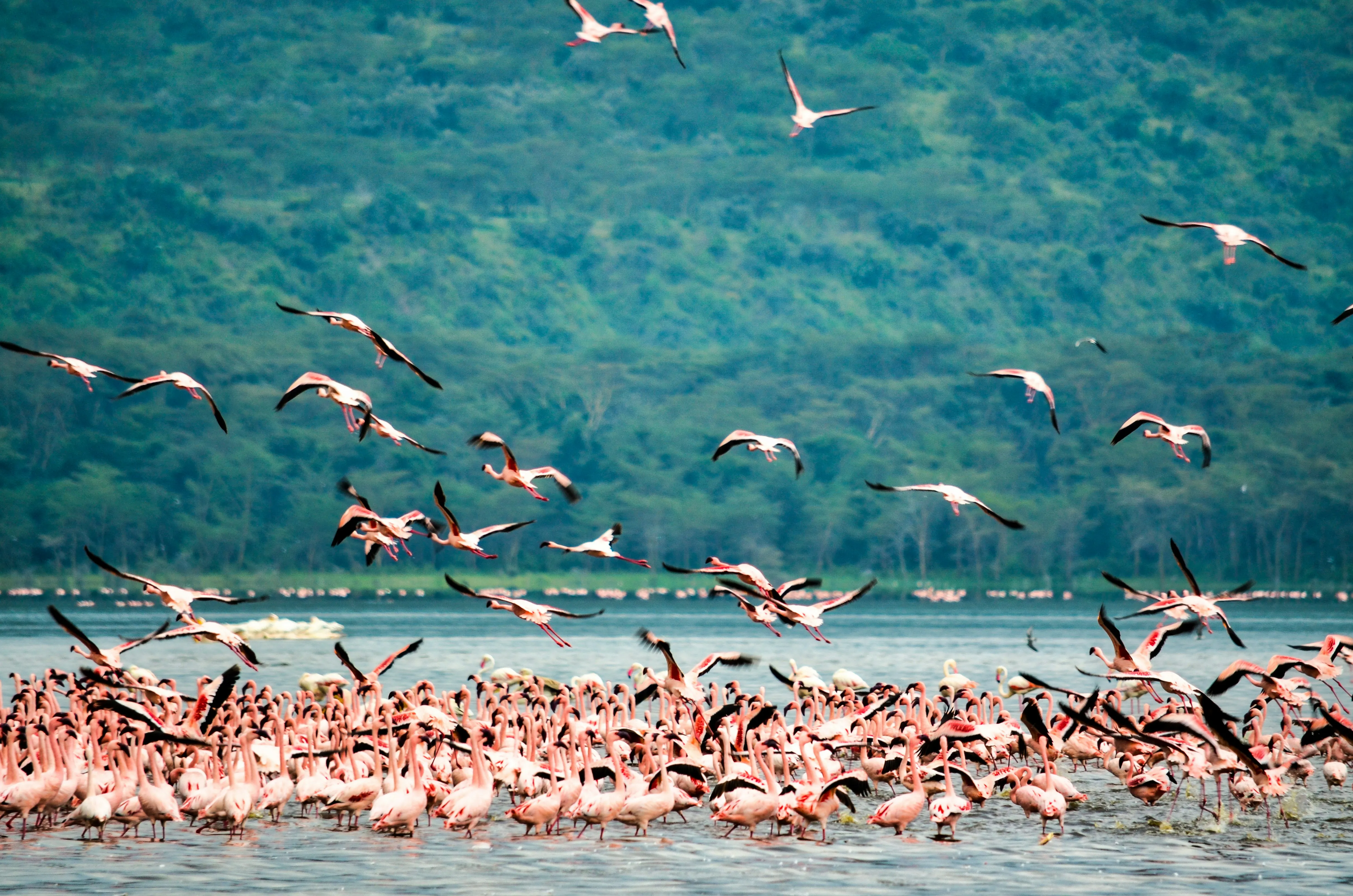
Depart Nairobi west, stopping at Lake Naivasha en route — a productive wetland for pelicans, cormorants, African fish eagles, and the sought-after African jacana. Continue to Lake Nakuru. Afternoon birding walk along the lake shore as thousands of flamingos paint the horizon pink.
Full day at Nakuru. The park hosts spectacular flamingo flocks. Also home to the rare Hemprich's hornbill, African crowned eagle, Jackson's widowbird, and Hildebrandt's starling. Baboon Cliff for an aerial perspective of the flamingo spectacle.
Drive west to Kakamega — Kenya's only tropical rainforest. It is home to over 350 bird species including 15 found nowhere else in East Africa: Turner's Eremomela, Chapin's flycatcher, and the extraordinary Great Blue Turaco.
An entire day inside one of Africa's most biodiverse patches of forest. Dawn chorus at 5:30am. Your guide locates speciality species systematically through the morning. Afternoon forest walk for understorey species.
Transfer from Kakamega to the Mara — a full half-day drive that passes through the rift valley and several distinct habitats, each producing new species. Arrive in the Mara for afternoon savannah birding: the Mara hosts over 450 species including 57 raptors.
A final morning dedicated to Mara savannah specialists: the Secretary Bird striding across open plains, Martial Eagle on a dead tree, Kori Bustard displaying, and the extraordinary Lilac-breasted Roller. Return to Nairobi via road.
Best months for this itinerary based on wildlife conditions and weather.